01 · Requirements
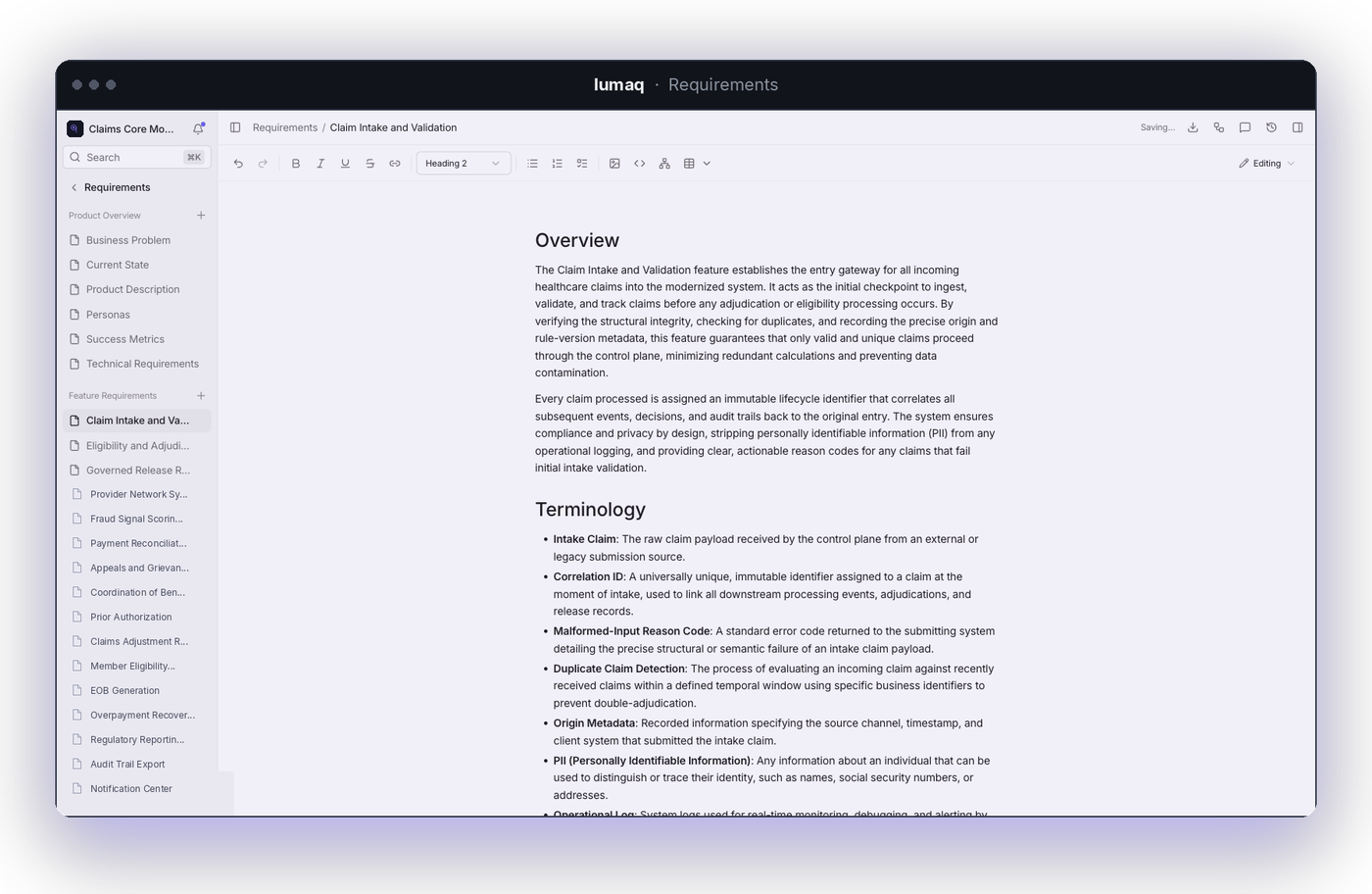
Every document keeps its version history, anchored comments, and links to its source artifacts. The agent drafts, reviews, and can reconstruct requirements from an undocumented codebase — but it proposes; you accept.
One governed control plane for the entire SDLC — requirements, blueprints, work orders, build and feedback connected as a single traceable graph, so every change is proven before it ships.
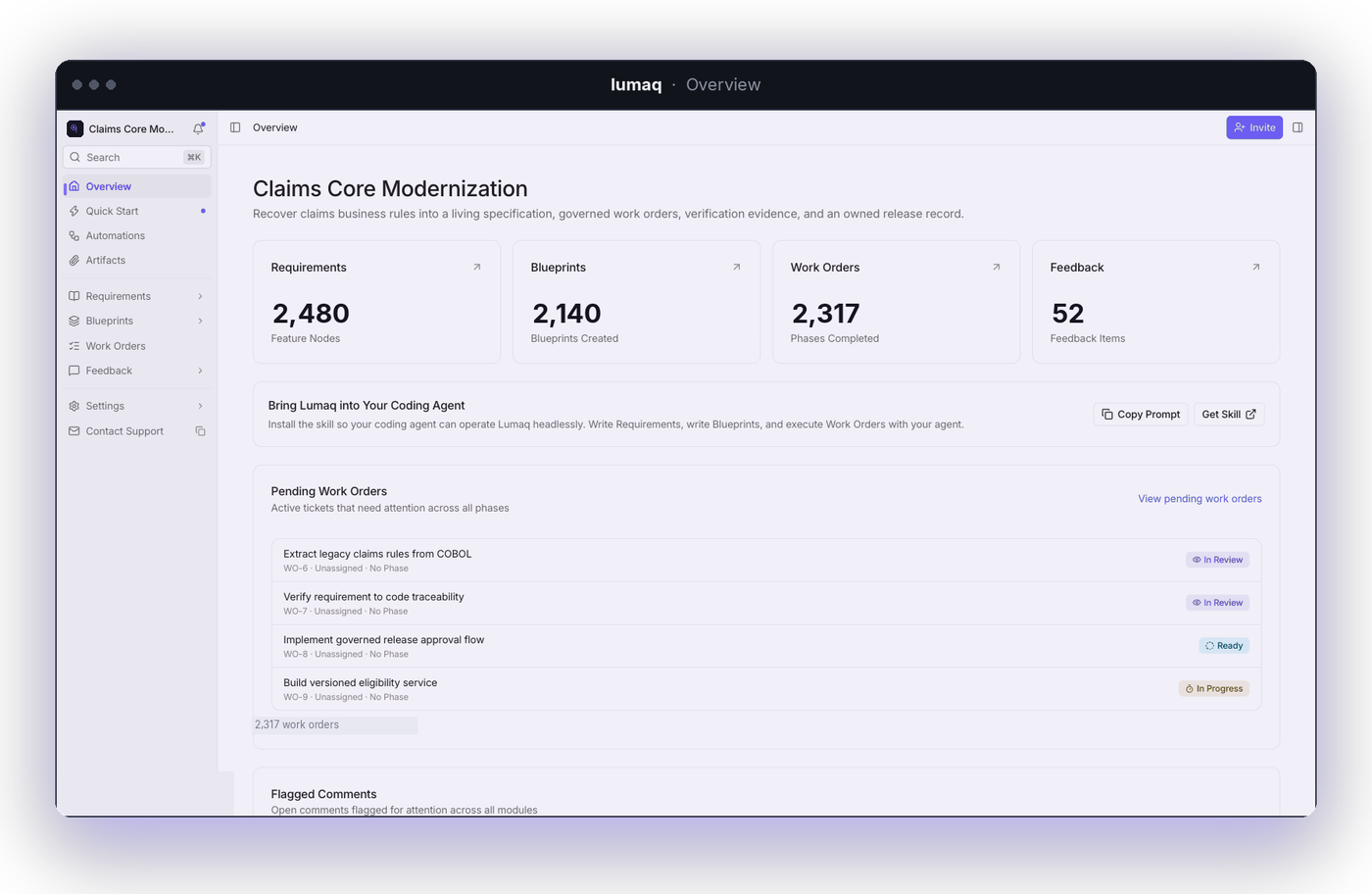
The last feeds the first: a closed loop, with continuous verification across all five.
Every document keeps its version history, anchored comments, and links to its source artifacts. The agent drafts, reviews, and can reconstruct requirements from an undocumented codebase — but it proposes; you accept.
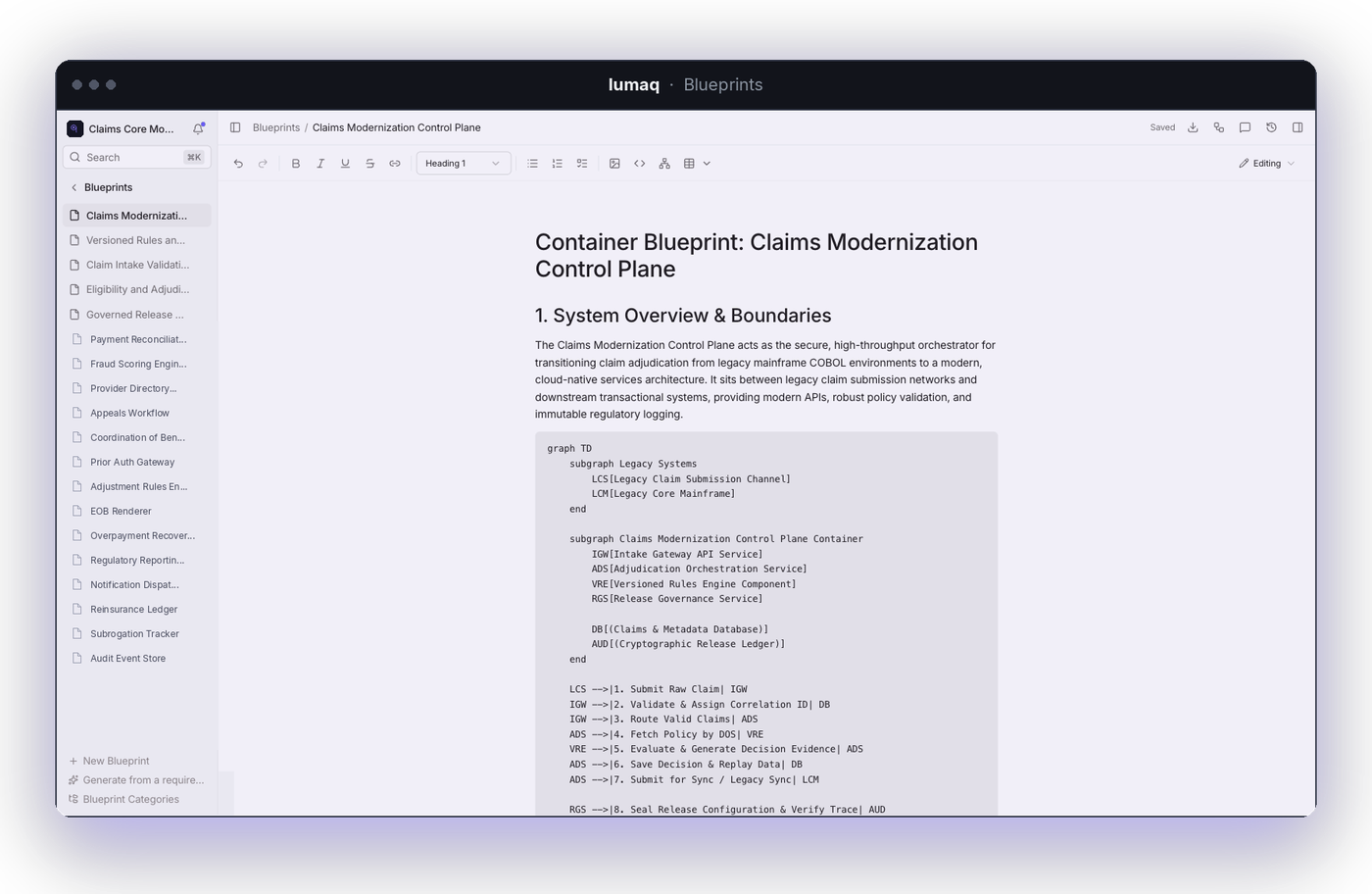
Container, component and feature, with diagrams. Each blueprint traces to the requirement it realizes — full requirement-to-code traceability.
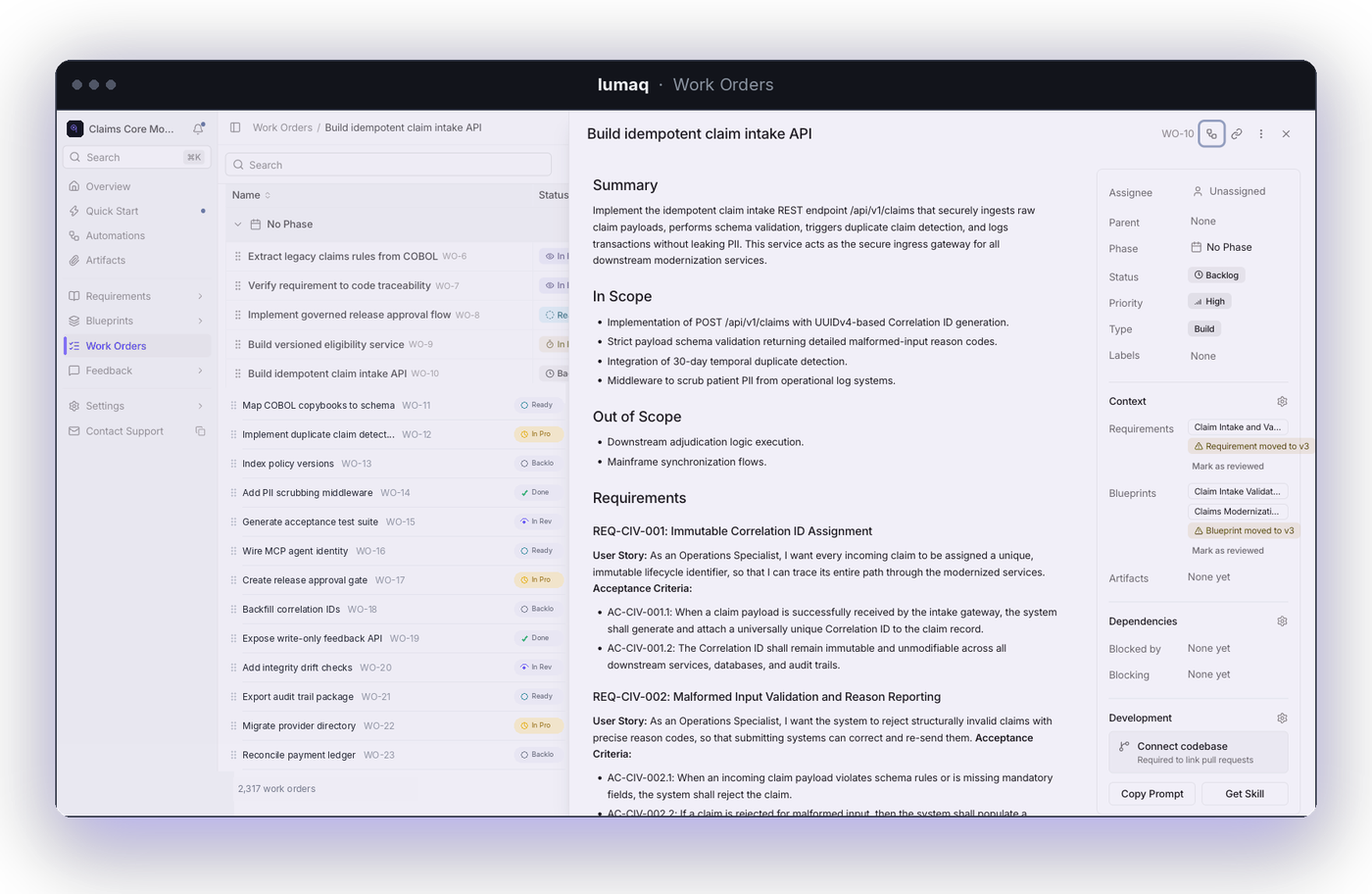
Scope, the requirements it implements quoted verbatim, the blueprints it touches, and end-to-end acceptance tests — everything an agent or a new engineer needs, without asking. Grouped into phases, with dependencies and one-click export.
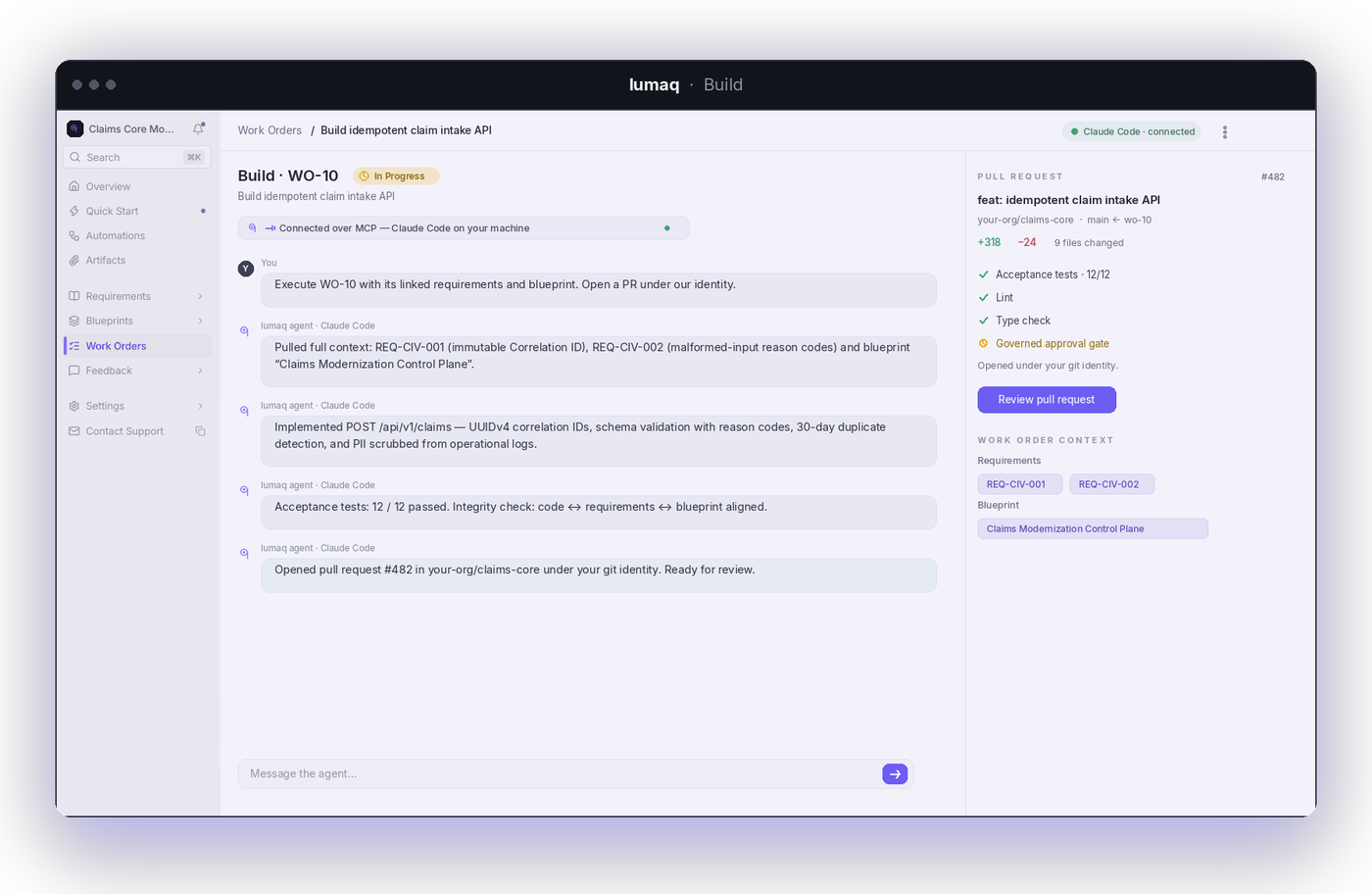
Model-agnostic: connect any coding agent your engineers already use — Claude Code, Cursor, Devin — over MCP, and work orders arrive with full context; or run the lumaq worker on your own machines. The pull request opens under your git identity, in your repository.
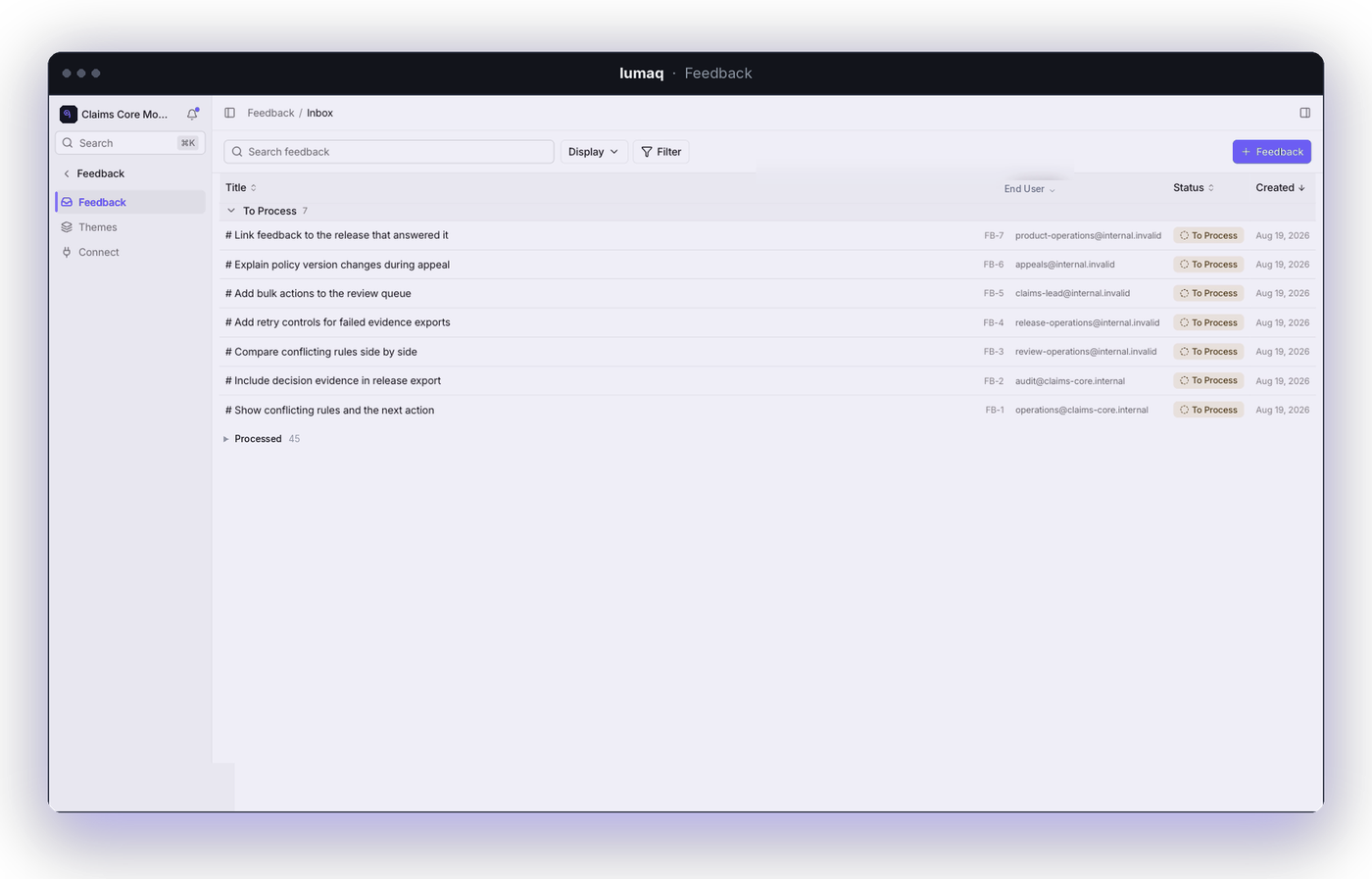
Your systems post real user feedback through a write-only API — no account needed for reporters — grouped into themes with quotes as evidence. A theme becomes the next requirement, and the chain from a report to the commit that answered it is a single query.
Verification runs continuously — it informs the decision, never blocks it. Scheduled integrity checks flag drift between code, blueprints and requirements as findings, never changes.
Every agent change lands on a proposal shelf — accept all, reject all, or one at a time. Automations propose too; they never approve.
if (actor.type === 'agent') {
  return proposal.create(change); // never a direct write
}The author can't approve their own work — no self-merge, ever.
if (workOrder.author === actor.id) {
  throw Error('cannot approve own work');
}One human gate; the approver is never the author. Two roles, model policy set once at the top.
function approve(workOrder) {
  require(reviewer !== workOrder.author);
  release(workOrder); // one human gate
}Reports rendered straight from the dashboard — git, tests and agent sessions — for three legacy estates rebuilt with every external contract preserved.
Open the reports →The platform maps your systems and reconstructs what they do; scope, timeline and compliance context are locked as success criteria before the build starts.
The pipeline runs and is fully visible: work orders move through phases, agents pick them up, acceptance tests and suggestions land on the shelf. You approve at the review gate as work reaches it.
Handover with the specification, blueprints and full audit trail intact. It runs in your environment, owned by you — ready to extend with us or without us.
Send us the system you need modernized or built — you get scope, a delivery approach, and a costed plan against your constraints.